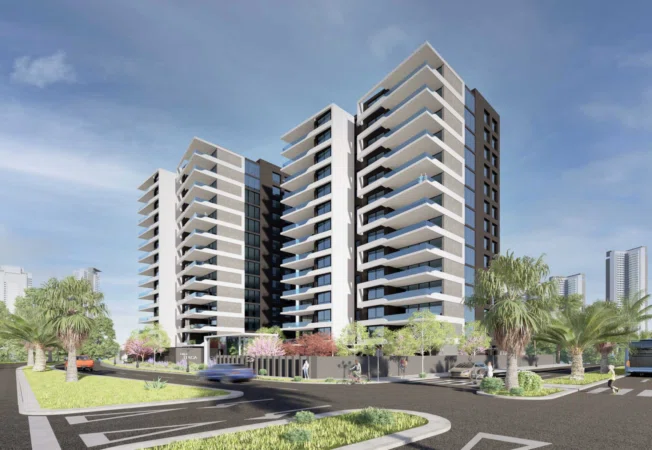
Object typeResidential
Completion dateQ1 2027
DeveloperAlmahue
Total areafrom 61 m² to 164 m²
Down Payment20%

The first thing investors and buyers notice when considering real estate in Chile is that prices are listed in UF rather than in familiar currencies such as pesos or US dollars. This abbreviation appears in almost all listings and serves as a key indicator of property value, which makes it difficult to analyze the market without understanding this tool.
UF (Unidad de Fomento) is not a currency in the usual sense, but an inflation-indexed unit of account. It is calculated by the Central Bank of Chile, and its value is updated daily based on the consumer price index. In simple terms, UF can be understood as a unit that preserves its real value over time.
Chile has experienced rising prices over a long period, which has led to a gradual decline in the purchasing power of its national currency. To protect long-term transactions and preserve the real value of assets, the government introduced UF as an accounting unit linked to price dynamics in the country. As a result, a system emerged in which incomes are paid in pesos, while payments for rent, property purchases, and mortgages are denominated in UF, ensuring stability and reducing the risk of currency depreciation.
For example, a property may be priced at 5,000 UF.
As of March 2026, this is approximately 195 million Chilean pesos, but over time the amount in pesos may increase as the value of UF is updated. At the same time, the price expressed in UF remains unchanged.
In other words:
This system is advantageous for both investors and residential property buyers. First and foremost, it protects capital from inflation, as value is fixed in UF and preserved in real terms, while its equivalent in pesos changes over time and adjusts automatically with rising prices.
However, this model also has its downsides, especially for those who earn income in pesos. As the value of UF in pesos increases over time along with rising prices, payments linked to it, including rent and mortgage payments, also increase, which may create additional financial pressure. In addition, for those encountering the Chilean market for the first time, this approach may not be intuitive, as it requires regular conversion into a familiar currency and an understanding of how UF works.
UF is one of the key features of the Chilean real estate market and largely defines its structure. This instrument provides stability and protects asset values from inflation, which is particularly important in long-term transactions. At the same time, working with UF requires an adjustment period, especially at the initial stage. Nevertheless, it is precisely this mechanism that makes the Chilean market more stable and predictable compared to other countries in the region.