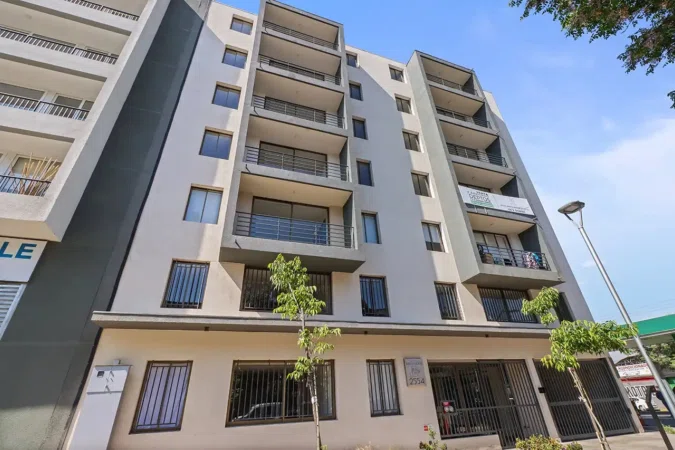
Object typeResidential
Completion dateQ4 2024
DeveloperMapocho Cueto
Total areafrom 35 m² to 47 m²
Down Payment100%
According to the Central Bank of Chile, the country’s residential property market is gradually recovering from a period of weaker activity. New home sales rose by 18% in the second half of 2025 and by a further 19% in the first quarter of 2026. Meanwhile, the Housing Price Index (Índice de Precios de Vivienda, or IPV) recorded a year-over-year increase of 2% in real terms in the fourth quarter of 2025.
As the market recovers, understanding the applicable taxes is becoming increasingly important for buyers, landlords, and owners who may eventually sell their property.
We will examine which taxes arise after purchasing a property, when renting it out, and upon its subsequent sale.
Unlike some European countries, Chile does not impose a universal property transfer tax on every purchase. However, depending on the property and the method of financing, the buyer may face VAT, stamp duty on mortgage documents, and annual property tax.
New homes sold by developers or other businesses that regularly sell real estate are generally subject to Chilean VAT, known as Impuesto al Valor Agregado (IVA), at a rate of 19%. VAT applies to the value of the buildings and improvements, while the value of the underlying land is excluded from the taxable amount.
When an apartment is purchased directly from a developer, VAT is normally included in the advertised price. Resale property sold by a private individual is generally exempt from the tax.
Where a property purchase is financed with a mortgage or another loan, the loan documents may be subject to Chile’s Impuesto de Timbres y Estampillas, or stamp duty. Fixed-term loans are taxed at 0.066% of the principal for each month or partial month until maturity, but no more than 0.8%.
Notarial expenses, fees for the legal review of the property, and registration with the Conservador de Bienes Raíces—Chile’s official property registry—also increase the cost of the transaction but are not taxes in themselves.
Once ownership has been registered, the owner may be required to pay Chile’s annual property tax, formally known as Impuesto Territorial and commonly referred to as contribuciones.
The tax is based neither on the purchase price nor on the property’s current market value. Instead, it is calculated using the official assessed value, or avalúo fiscal, established by Chile’s Internal Revenue Service (Servicio de Impuestos Internos, or SII). This assessment considers the property’s location, land area, building characteristics, and other factors and may differ significantly from its market value.
Residential property benefits from a general tax-free threshold of CLP 61,711,570 equivalent to approximately $66,800.
No contribuciones are due if the property’s avalúo fiscal is no more than CLP 61,711,570. Where the assessment exceeds this threshold, only the amount above the threshold is taxable.
The following annual rates apply in the second half of 2026:
These thresholds are adjusted for inflation every six months.
Property tax is payable in four installments, due in April, June, September, and November. The tax bill may also include municipal waste collection charges and other statutory surcharges.
If the combined avalúo fiscal of property owned by a single taxpayer exceeds 827 UTA, the Sobretasa de Bienes Raíces—an additional tax on a large property portfolio—may arise. It applies to both individuals and legal entities.
The Unidad Tributaria Anual (UTA) is an inflation-adjusted tax unit whose value is set by the government each year. The thresholds for the Sobretasa de Bienes Raíces are therefore stated in UTA rather than fixed amounts in Chilean pesos and are updated annually.
The following progressive rates apply:
Property owners may qualify for a reduction in contribuciones under the special DFL‑2 housing regime or the tax relief available to older homeowners.
DFL‑2 (Decreto con Fuerza de Ley N° 2) is a special legal framework introduced in 1959 for qualifying affordable housing, known as vivienda económica. The regime was created to encourage the construction and purchase of homes intended for permanent residential use.
Qualifying DFL‑2 properties receive a 50% reduction in annual property tax. The relief period depends on the property’s floor area:
The benefit is available only to individual owners and generally applies to no more than the first two qualifying properties they acquired. Companies are not eligible. A floor area of 140 m² or less does not by itself qualify a home for the benefit: its DFL‑2 status must be expressly recorded in the property documents.
Separate tax relief is available to female homeowners aged 60 or over and male homeowners aged 65 or over. Owners with annual income of no more than 13.5 UTA—approximately $12,200—may be fully exempt from contribuciones. Those earning more than 13.5 UTA but no more than 30 UTA—approximately $27,100—may qualify for a 50% reduction.
To qualify, the property must be the owner’s primary residence. Both its assessed value and the combined assessed value of all properties owned by the taxpayer must remain within the applicable limits. As these amounts are regularly indexed, current thresholds should be confirmed through the SII. The relief does not cover municipal waste collection charges.
Where a property qualifies for both the general tax-free allowance and DFL‑2 relief, the SII applies whichever calculation produces the greater benefit for the owner.
For an accurate assessment of the tax due, owners should use the SII’s official calculation service or seek advice from a qualified local tax professional.
Owners who purchase property as a rental investment or with the intention of reselling it may face additional tax obligations. These are covered in our separate guide, “Taxes for property investors in Chile: Renting and Reselling.”